


Systems Solution
Youth in Behavioral
Health Crisis
Active
A Systems Thinking Model
Sonoma County is leading an initiative to apply a ‘Systems Thinking’ approach to address the youth behavioral health crisis. It is being led in partnership with a broad ecosystem of partners to create a coordinated multi-sector system of care. The pilot explores the use of ‘systems thinking’ as a multi-sector strategic planning methodology that can be applied to other counties/issues.
Background
Sonoma County youth ages 12–26 facing mental health and substance use challenges often end up in emergency departments—not because hospitals are the best place for care, but because safe, culturally responsive behavioral health options are limited. These gaps are especially pronounced for BIPOC and LGBTQI youth.
Recent years have intensified this crisis. Wildfires, the COVID-19 pandemic, and the pressures of social media have contributed to rising distress among young people. Youth mental health has consistently emerged as a top community priority across assessments, focus groups, and interviews informing the County’s Community Health Improvement Plan. In response, the Sonoma County Committee for Healthcare Improvement (CHI)—a collaborative of health system and care delivery leaders—has committed to advancing equitable, coordinated solutions that improve access to care and outcomes for Sonoma County residents.
In 2024, health system and community leaders aligned around a shared opportunity: strengthening how the system responds to youth in behavioral health crisis. This collaboration led to the formation of the Youth Crisis Action Coalition (YCAC), focused on improving coordination across existing services and supporting smoother transitions of care for youth in crisis.
Project
Stanford Impact Accelerator was asked by the Committee for Healthcare Improvement to facilitate and evaluate a multi-stakeholder collective impact coalition using a ‘Systems Thinking’ methodology to help better apply limited resources in a more targeted way to improve care for youth and their families experiencing a behavioral health crisis. The Systems Thinking approach is used to analyze the forces and patterns that keep existing conditions in place, so that interventions can make a greater impact by changing the systems.
Recent data from the 2023–25 Sonoma County Community Health Assessment highlights the emergency.
35%
of local high school students reported feeling constantly sad or hopeless for 2+ weeks in the past year.
13%
of these students have seriously considered attempting suicide.
The emotional toll is especially heavy on students who identify as bisexual or gay/lesbian.

The Committee for Healthcare Improvement and a Systems Thinking Facilitator from the Innovation Learning Network (Chris McCarthy) hired by the Impact Accelerator, gathered a diverse group of stakeholders from across Sonoma County for a ‘Network Catalyst’ meeting to understand the problem, recruit a small core group of leaders to help lead the effort, and create a project timeline and structure. From there, a more diverse set of stakeholders gathered to frame the guiding and near stars and participate in a series of systems thinking exercises designed to understand the forces that contribute to the current state of Behavioral Support for youth and their families in crisis using the ‘Iceberg’ Systems Thinking Model.
These System Illumination sessions create a map of the events, trends, structures, and mental modes that are present in the current system. The stakeholders then identify areas on the map that would have an ‘outsized impact’ or positive ripple effect on the system if interventions were applied. This leads to a series of Collective Impact efforts or ‘Interventions’ guided by Human-Centered Design.
Explore the Journey
Hover over each phase of the process to understand how collaborative systems thinking informed strategy, surfaced opportunities, and shaped the path forward.

1
Network Catalyst
Network Catalyst


A meeting to understand the problem, recruit a small core group of leaders to help lead the effort, and create a project timeline and structure.
Systems
Illumination
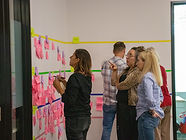
a more diverse set of stakeholders gathered to frame the guiding and near stars and participate in a series of systems thinking exercises designed to understand the forces that contribute to the current state of Behavioral Support for youth and their families in crisis using the ‘Iceberg’ Systems Thinking Model.
2
Systems Illumination
3
Futures Inspiration
Futures Inspiration
.png)
Futures thinking is a strategic mindset that explores multiple possible scenarios—from the probable to the aspirational—to help us make better-informed decisions today and proactively shape the world we want to live in.
5
Sustainability & Systems Feedback
4
The Interventions
The
Interventions
In a hands-on "interventions kickoff" workshop, the YCAC transformed high-level design mandates into three concrete, actionable projects focused on school-based mental health, youth empowerment, and community prevention.
Coming in 2027


After identifying 11 critical leverage points within our system, we developed 8 core project concepts. Today, we are moving forward with three foundational initiatives designed to spark immediate, sustainable change.
Interventions
Project Concepts
This stage is about translating identified leverage points into a tangible vision. This is not a formal project plan, but rather a high-level conceptualization designed to test feasibility and alignment.


Systems Thinking
as a Tool
What is systems thinking?
Beginning with community stakeholders familiar with the challenge, systems thinking methods are used to view the problem holistically, create a map to understand the interdependent and dynamic forces that contribute to the challenge, and identify opportunities for innovation that will have an outsized impact.
The Impact Accelerator uses Systems Thinking tools to facilitate multi-sector healthcare innovation for entrenched, complex challenges.
Sustainability and Systems Feedback
Interventions
Futures
System Illumination
Network Catalyst
